Monday, December 8, 2008

"Why did God create rodents and other crawling creatures?"


Commenting on the statement by Hillel the Elder in the Talmud, "Be of the disciples of Aaron, loving peace and pursuing peace, loving the creatures and drawing them near to the Torah" Rabbi Steinsaltz writes:

“Hillel the Elder is not observing that we must love the righteous, but ‘creatures.’

‘Creatures’ is a general term that refers to all beings, even the very lowest, of whom we can say nothing more positive than that they were created.

In this regard, the prophet Elijah was once asked why God created rodents and other crawling creatures.

He replied that when God looks at His world and sees the evil of human beings and wishes to destroy them, He considers those rodents as well and decides that -- just as He allows them to exist -- so will he allow such people to exist.

There are people whose only saving grace is that there are other creatures even lower than they.

It is of such people that Hillel the Elder tells us that it is a mitzvah to love them and bring them close to Torah."

--Rabbi Adin Steinsaltz


From Understanding the Tanya, p.132, by Rabbi Adin Steinsaltz

Read More...

Sunday, December 7, 2008

"He sees not what he lacks but what he has"


"The ‘righteous person who experiences good’ (in the Talmud's phrase) is a person who is immune to evil.

He sees things differently than we generally do.

He sees not what he lacks but what he has.

This is a different spiritual construct, a different way of living, a state of being in which it is impossible to suffer.

This is not to say that, in an objective sense, such a person does not experience troubles and ills but that he does not suffer.

Rabbi Nachman of Bratslav, certainly not a naïve man, contracted tuberculosis at the end of his life.

He never complained about having contracted this disease, but expressed great pleasure if, between coughing and spitting up blood, he was able to say a few words.”


--Rabbi Adin Steinsaltz


From Opening the Tanya, p. 285 by Rabbi Adin Steinsaltz

Read More...

Friday, December 5, 2008

"We strive to not only instruct, but also to educate"


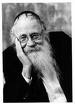
An interview with Rabbi Steinsaltz was published in the French magazine, Le Petit Hebdo shortly after the publication of a French edition of Rabbi Steinsaltz’s book, Teshuvah: A Guide for the Newly Observant Jew.

Grateful thanks to my friend, Rabbi Pinchas Allouche, Spiritual Leader of The Sephardic Cultural Center in Scottsdale, Arizona, who was kind enough to translate the interview for the benefit of readers of this blog. Rabbi Allouche’s father, Michael Allouche, is the translator of several of Rabbi Steinsaltz’s books into French, including Teshuvah.

An Encounter with Rabbi Adin Steinsaltz

by Avraham Azoulay

Le P’tit Hebdo : You have written many books on Judaism. What is the goal of your book Teshuvah, which has recentely been translated to French?

Rabbi Adin Steinsaltz : The preface of the book indicates the goal of the book clearly. It is not a book that aims to preach in favor of Teshuvah. Rather, it was written to help all Jews, close or distant, who strive to return to Judaism, by asking: “What shall I do today to succeed in returning home?” My basic assumption is that the reader of this book has already developed a minimum level of interest in Judaism. But for those who have absolutely no interest in any attribute of Judaism, I have other books to suggest.

L.P.H. : Your books are translated to many languages including Chinese and Japanese! How can you ensure the authenticity and accuracy of the translation?

Rabbi Steinsaltz: Obviously, I do not master all languages. All I do is simply try to find a good translator. Initially, Teshuvah was written in Hebrew, and shortly after it was translated to English. I know the author of the French translation, Michael Allouche, very well. He has already translated some of my additional books. The subject of the book also interests him personally, and he expresses himself nicely. I think that the French translation is very good, probably even better than the translations in other languages.

L.P.H. : Is this indeed a book where you aim to “open new doors”?

Rabbi Steinsaltz: Certainly. This book does not strive to replace the Code of Jewish Law, which is indispensable to the Jewish home, although it is also very hard to understand for a newcomer who lacks a permanent guide or a teacher. This resembles a classical French Restaurant where the new customer cannot comprehend the complicated names of the various dishes which are offered on the menu. In this book, I simply tried to explain the names and content of the many dishes that Jewish life offers. I have tackled questions, such as: where to begin, what should one study, what constitutes “Kashrut”, Shabbat and the Jewish Holidays. For it is often difficult for Rabbis, or Jews who were raised observant, to perceive the level of ignorance that exists in a Jew who was distant, and to understand the elementary questions that he may face.

L.P.H. : Did you focus on the practical aspects of Judaism?

Rabbi Steinsaltz: In truth, that is an understatement. This book starts by reviewing the essence of teshuvah, and its particularity in the modern world. Besides the practical aspects, which I also wrote about, I have also tackled the “psychology of teshuvah”; the natural and personal struggles that rise deep within a person’s being. Every baal teshuvah undergoes several crisis, which I describe in the book : problems of faith, the relation to his past, or the sometimes disappointing encounter with the religious community. The baal teshuvah, who is determined to change his life whilst continuing to live in this very world, must learn how to relate to his own family, his social and professional environmnent .These are the domains that I dwell on in this book, hoping to furnish a precious guide to those who are willing to make this step.

L.P.H. : In addition to your occupation as an author, you are also the dean of educational institutions, that incorporate a unique approach. Your school in Jerusalem, Mekor Chaim, is extremely successful, notably among the ‘olim’ from France. Is it hard to meet and satisfy all of the demands of the school?

Rabbi Steinsaltz: Each year, we receive 150 applications for a class that can only contain 30 students. The selection of students is thus harder than the selection of students in universities! I hope to, one day, expand my establishments, but the political promises currently remain in the realm of nice words. We favor the “olim chadashim” in the selection process. If the motto of France is “Liberty, Equality, Fraternity”, ours uses words that are slightly different: “Quality, Religiosity, Identity.” We strive to not only instruct, but also to educate our students. Hence, the cooperation of parents is crucial, and for many, Mekor Chaim seems like a large and beautiful family.

L.P.H. : Are you optimistic about the current situation in Israel?

Rabbi Steinsaltz: If you were trying to make me state that the situation in Israel is “good”, I will of course, state that it is far from good. Nevertheless, I am an optimistic Jew, yet with a Jewish definition of optimism. In the 18th Century, there was a great dispute between Leibnitz and Voltaire concerning the type of world that we live in. Leibniz claims that “we live in the best possible world” Voltaire, in Candide, reached an opposite conclusion: “We live in the worst possible world”. In my opinion, the Jewish response to this dispute is as follows: “We live in the worse of possible worlds, in which there is still hope.”

L.P.H. : Is this statement based on mystical sources?

Rabbi Steinsaltz: Yes indeed. This quote stems from the teachings of Chaim Vital, the disciple of the Arizal, in his book Etz Chaim. Evil, he teaches, is the ruler of our world, as it is the world of “Kelipa”, a term that is used to describe the concealed presence of God, thus forcing the good to exist as a minority. Yet man has the power to repair the world and transform it into a world of holiness (“Kedusha”). It is thus not surprising that this book also depicts the Messianic era as the culmination of our work to transform this world into a world of holiness. Without a doubt, this is the calling of the Jewish condition: Having complete faith in God, while, at the very same time, working tirelessly to bring about the revelation of God and the ultimate redemption.
Read More...

Thursday, December 4, 2008

"The question that must be asked is not 'Must I do all or nothing?'"


"The decisive point in the turn to Judaism is not the initial awakening, which can be seen merely as a response to a call.

It is, rather, the inward affirmation of ‘we shall do and we shall obey’ (Exodus 24:7)—the decision to address one’s life to the realization of this commitment—that makes the turn real.


Rather than waiting for an opportune time to make the change all at once—something that may never come along—it is better to change one’s life gradually, by stages, according to one’s inner capacity and outward circumstances.

But this does not lessen the importance of making a firm decision at the outset.

There is a crucial moment in which one ‘receives the Torah,’ with all its contents, both general and specific.

It is then that one sets out on the path, toward the realization of one’s resolve.


Some are able to achieve this relatively easily, passing as if by magic from one world to the other, and encountering few obstacles or difficulties.

But for most it is a complex, long drawn-out process, fraught with tribulations.


The question that must be asked is not, ‘Must I do all or nothing?’ but rather, ‘What beginning can I make that will facilitate eventually reaching the goal of doing it all?’"


--Rabbi Adin Sterinsaltz

From “All or Nothing: The False Dilemma” p. 21, in Teshuvah by Rabbi Adin Steinsaltz

Read More...

Wednesday, December 3, 2008

"I was such a non-believer that I didn't even believe in heresy"


"Over 20 years ago, I recorded and transcribed a meeting between Rabbi Steinsaltz and a group of journalists in New York. One of the journalists asked Rabbi Steinsaltz, “Why did you become religious?”

Rabbi Steinsaltz responded:

”To even ask such a question is impertinent.

And I've been asked this so many times that it's become tedious.

It's also enervating.

I won't say anything very specific for the same reason that I don't undress in public.


I know that in some places it is done, but not by me.

But, generally speaking, I would say that my turning to religion came about because of two reasons that may not be considered religious enough.

One was that, I am, by nature, an unbeliever, which means that I couldn't take lots of things for granted that other people could.

I discovered when I was very young that people do believe in lots of things.

People were ardently religious because they were taken in by things that other people say, things that people assume to be true.

Now, being an unbeliever almost by nature, I couldn't believe them, so I began to ask questions--but not questions just to annoy people.

My first name, Adin, means gentle.

Someone with this name is almost fated to be very rude.

I was always a delicate boy, so people used to come and pat my head, and say, 'It's such a nice name. It suits you so well.'

So, of course, when you hear this so many times, you become coarser and coarser and more and more rude.

I didn't want to annoy people.

But I began asking questions, many questions about things that were accepted in Israel and in other places.

I was perhaps a greater non-believer than the rest of my countrymen.

They were such great non-believers that they didn't even believe in Judaism.

I was such a non-believer that I didn't even believe in heresy.

So this was the turning, a very important one.

I discovered that one has to believe in many heresies in order to be a heretic.

But in order to accept heresy, one has to be a believer.

And if you have to be a believer, it becomes a matter of choice in what to believe.

That was one point.

The other point was that, as a boy, and certainly as a young man, I was full of desires.

Big ones.

And the world didn't seem big enough.

I wanted more and more and still more.

In a certain way, this was a turn into a fourth dimension, or a fifth dimension, or whatever dimension.

My turning towards religious thinking or thinking about something like God came because the world was too small.

Because of this, because I felt that unless a person becomes attached to the Infinite, the world becomes far too restrictive to live in.

My turnabout was a very slow one, a very painful one.

I'm still trying to become better.”


--Rabbi Adin Steinsaltz

Read More...

Tuesday, December 2, 2008

"Doing God such a big favor"


"I dislike certain traits in many religious people and one trait is smugness.

I think it is dangerous for a person to go to shul and to think that he does God such a big favor that he will be forgiven for everything.

He is so self-satisfied and feels he is doing God such a favor by visiting His place from time to time."


--Rabbi Adin Steinsaltz


From a talk by Rabbi Steinsaltz in New York City

Read More...

Monday, December 1, 2008

"Jewish mysticism is very non-mystical"


"One of the differences between mysticism in general and Jewish mysticism in particular is that contrary to all other forms Jewish mysticism is very non-mystical, very bound to the law.

Kabbalah is a kind of a commentary on the mitzvot, on the meaning of the mitzvot.

The feeling, the enjoyment, and the result are not entirely connected.

For example, sometimes the sexual act, creating life, is enjoyable; sometimes it is less enjoyable.

The enjoyment has no real connection with either the fruitfulness or with the meaning of the process.

Some mystical things that are practiced are a kind of a spiritual masturbation.

That is one side.

On the other hand, any kind of mitzvah is basically a communion, a binding of oneself with God.

Sometimes I enjoy this act of being bound.

Sometimes I don't enjoy it.

My enjoyment or lack of enjoyment doesn't change the fact very much.

Sometimes I have a feeling for it and sometimes I have to learn about it.

Sometimes I don't get it right.

But again, it doesn't matter so very much.

My enjoyment is a kind of enticing force of doing things, but this is just a small part of the real deed, which is the creation of some kind of connection between man and God, and this is the meaning of a mitzvah."


--Rabbi Adin Steinsaltz


From a lecture by Rabbi Adin Steinsaltz in New York City.

Read More...