Wednesday, June 24, 2009

"Hatred has become almost fashionable"


"In the past few years, a relatively new phenomenon has arisen: the legitimacy of hatred.


Mutual hatred among Jews is no longer a thing that one is ashamed to express publicly.

On the contrary, it has become almost fashionable.

It cuts through all sectors—a simple, all-inclusive, fundamental hatred, a hatred that does not even need self-justification.

It does not need to say, ‘I am better, and therefore the others are worse.’

Rather, it is a hatred based on the others being, by definition, bad.

There is no longer a need to call each other bad names.

One’s very label is enough of an insult: ‘settler,’ ‘haredi,’ ‘leftist,’—are there dirtier words than these?

So the words themselves become foul, and the people become defiled and loathsome in one another’s eyes.

It is this that I am trying to fight.

Surely not on my own, but also not with much company.”

--Rabbi Adin Steinsaltz


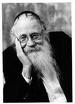
From "Is Ephraim a Dear Son to Me?" in A Dear Son to Me by Rabbi Adin Steinsaltz. Photo of Rabbi Steinsaltz by Michel Milman.

Read More...

Tuesday, June 23, 2009

"Prayer is an expression of faith"


“Once, while I was in the middle of my prayers, my little daughter tried to talk to me, and when I failed to respond, she was very angry with me.

She said, ‘Why don’t you speak to me?’

Later on, I answered her by saying, ‘I was busy. I was speaking with God.’

She then replied, with great understanding, that she hadn’t noticed that God was answering me.

This second question was very deep.
A four or five-year-old girl was prepared to accept the notion that I speak with God when I pray.

But she wanted this to be a two-way conversation and not just a speech on my part.

The point is that every prayer boils down in the final analysis to a very basic point: I say the words 'Blessed art Thou,’ and especially the Thou, if I feel the presence of the Thou before me.

If I have someone with whom to speak, then I can pray.

If I have no one with whom to speak, then what is the point of all these words, and all the things I say?

What I am saying here is so simple that it should not need to be said, except that it still does need to be said, and stressed:

Prayer is an expression of faith.

It is impossible to pray, except out of faith in the encounter with God, in the standing of the I opposite the Thou.

It is not a simple question of Buberian philosophy.

It is a simple point, so simple that any child can understand it.”


--Rabbi Adin Steinsaltz


From “Prayer Education” in On Being Free by Rabbi Adin Steinsaltz

Read More...

Monday, June 22, 2009

"Violence is like any other symptom"


"What happened at the U.S. Holocaust Museum is an extreme sign of something happening in different parts of American society, albeit in less violent manifestations.


Once hatred becomes--even in a refined, intellectual or masked way--legitimate, it evolves and may migrate from magazine stories and newspaper editorials to the barrel of a gun.

Even when one calls it euphemistically 'anti-Zionism', somehow this hatred spreads to becoming anti-Jewish, perhaps anti-human, in general.

The mad perpetrator is merely the one who does what others say and think.

Violence is like any other symptom - one has to determine the roots instead of only deploring the end results."

--Rabbi Adin Steinsaltz

From the website "On Faith" June 12, 2009

Read More...

Sunday, June 21, 2009

"No one is in a position to despise backsliders"


"There are no tricks for ensuring that one will not trip and fall, no matter how righteous one has been or for how long.


The Talmudic sages deal with this problem, but after lengthy analysis and numerous examples they fall back on the generalization that no one is safe from temptation.

Consequently, no one is in a position to despise backsliders.

Over the years one learns one’s own weaknesses and how to overcome or at least circumvent them.

One learns to create for oneself those inward and outward circumstances most conducive to continued progress, without fear of experimentation or others’ contempt.

One who is unfamiliar with such problems or, even more so, one who has never built up for himself a way of life that can serve as a bulwark against them is much more likely to stumble."

--Rabbi Adin Steinsaltz


From “Lapses and Crises” in Teshuvah by Rabbi Adin Steinsaltz.

Read More...

Friday, June 19, 2009

""Everyone has a special gift"


“Everyone has a special gift in some particular field of endeavor, and in that field is called on to make a special contribution.


The Sages say that in addition to keeping all the commandments, one should choose a single observance in which to be particularly scrupulous and diligent—‘more careful,’ in the words of the Talmud.

In this choice, one can be guided by the prompting of one’s own heart and inclinations.

As the masters of Mussar (moral education) said, one who has a talent for cutting precious stones should not be a lumberjack, for to do so would be to spurn a gift bestowed by the Creator.”


--Rabbi Adin Steinsaltz

From “The Relation to the Past,” in Teshuvah by Rabbi Adin Steinsaltz

Read More...

Thursday, June 18, 2009

"The soul of man is a manifestation of God in the world"

"In its profoundest being, the soul of man is part of the Divine and, in this respect, is a manifestation of God in the world.

To be sure, the world as a whole may be viewed as a divine manifestation, but the world remains as something else than God, while the soul of man, in its depths, may be considered to be a part of God.

Indeed, only man, by virtue of his divine soul, has the potential, and some of the actual capacity, of God Himself.

This potential expresses itself as the ability to go beyond the limits of a given existence, to move freely, and choose other paths, enabling man to reach the utmost heights -- or to plumb the deepest hells.

It is, in other words, the power to will and to create."

--Rabbi Adin Steinsaltz

From The Thirteen Petalled Rose by Rabbi Adin Steinsaltz

Read More...

Wednesday, June 17, 2009

"The relationship to the Divine is a completely private affair"


"When man reaches certain heights, he learns more about God, the order and arrangement of things, relationships between one action and another, and the power and significance of law.


Nevertheless, in the last resort the relationship to the Divine is individual.

It is a completely private affair, the relationship of the single man in all his uniqueness of self and personality, oblivious of the infinite distance between himself and God, precisely because God in His being infinitely distant, beyond any possible contact, is Himself the One who creates the ways, the means of contact, in which every thought, every tremor of anticipation and desire on the part of man work their way until they reach the Holy One Himself, the Infinite, Blessed be He."

--Rabbi Adin Steinsaltz

From The Thirteen Petalled Rose by Rabbi Adin Steinsaltz

Read More...