Tuesday, September 8, 2009

"A world can exist only as a result of the concealment of it's Creator"


"The various worlds are characterized as higher or lower in relation to the degree of their transparency to the divine light, which is their very light and substance.

As one descends in the system of worlds, materiality becomes ever greater: in other words, the beings of the lower worlds feel their independent existence with greater intensity than the beings of the higher; they are more aware of being separate individual selves.

And this consciousness of their separate selfdom blocks the divine plenty and at the same time obscures the truly unchanging essence that lurks beneath the individual personality.

In short, the lower the world, the more it is pervaded by a sense of the “I,” and consequently the more it is subject to the obscuring of the divine essence.

It can be said, however, that all of the worlds--and, indeed any separate realms of being--exists only by virtue of the fact that God makes Himself hidden.

For when the divine plenty is manifested in it complete fullness there is no room for the existence of anything else.

A world can exist only as a result of the concealment of it's Creator.

As one descends from high worlds to lower, with each new level of descent the separateness, the independence of the world from it becomes more pronounced and emphatic, while the divine plenty becomes more hidden.

Hence the creatures in the world of action may reach (as men often do) a condition in which they are not only unaware of the life-giving divine plenty, but may even repudiate its existence altogether.

On the other hand, as on ascends the scale of being, the worlds become ever more clear and transparent to the divine plenty."

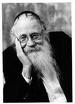
--Rabbi Adin Steinsaltz


From "Worlds" in
The Thirteen Petalled Rose by Rabbi Adin Steinsaltz

Read More...

Monday, September 7, 2009

"Thank you for giving me an appetite"


"Rabbi Zusha was once reduced to poverty as to lack bread, and when he was very hungry, he turned to God and said: ‘Master of the Universe, thank you for giving me an appetite’ ”

--Rabbi Adin Steinsaltz


From
Opening the Tanya, p. 283, by Rabbi Adin Steinsaltz

Read More...

Sunday, September 6, 2009

"One cannot proceed from one point to another without losing one’s previous balance"


"When a person passes from one level to another, there is an increased danger of falling.

He is no longer secure in the previous level, and can easily fall before he gains a hold in the next level.

This is true for every change in condition or of level of existence.

For instance, when entering the water to swim, there is a moment when one has to lose balance, disconnect from the secure contact with the ground, and be neither walking nor floating.

Transition thus always involves imbalance and danger.

If someone who is learning some skill, either manual or intellectual, is put into a situation where there is a real difference of approach to the subject, it seems fairly necessary to advise the person to forget all that he had learned previously because it would only serve to confuse him.

He cannot progress to a higher level of performance without forgetting, letting go of what he already knows.

So that those people, for example, who are intrinsically unable to forget are also those who find it hard to progress.

The passage from one level to another demands a sort of leap, an abandoning of all that was solid ground.

It is a basic feature of human progress, resting on the principle that the interval between points or fields comprises a mode of nothingness, and one cannot proceed from one point to another without losing one’s previous balance, even if only for the briefest moment."

--Rabbi Adin Steinsaltz


From
Pebbles of Wisdom from Rabbi Adin Steinsaltz

Read More...

Friday, September 4, 2009

"Kabbalah needs more than a smattering of knowledge"


"Personally, I am not for this new Kabbalah trend.

I think it is cheap and I think it presents a danger.

Not that people are learning too much Kabbalah, but that they are focusing only on the mystery and secret and magic and don’t address how people should change or become more Jewish.

Kabbalah is not a gimmick.

It is something holy and serious and it needs much more than a smattering of knowledge.

Imagine taking a six-week course in neurosurgery and hanging up a shingle.

It is not only fraudulent, but dangerous."

--Rabbi Adin Steinsaltz


From
Pebbles of Wisdom from Rabbi Adin Steinsaltz

Read More...

Thursday, September 3, 2009

"God weighs every person differently"


"The question is asked about the universal longing and aspiration for peace of mind and heart.

There are those who do not reach too high a decree of tranquility.

It is taught that God weighs every person differently.

Some are judged according to their achievements and others by their failures.

No one is weighed in the balance by the peace of mind he attained, but rather by the nature of his struggle and what was won in the battle."

--Rabbi Adin Steinsaltz


From
Pebbles of Wisdom from Rabbi Adin Steinsaltz

Read More...

Wednesday, September 2, 2009

"Our goal is to always aim for greater heights"


"It is taught that Rabbi Levi Yitzchak of Berditchev was unable to lead the prayer service one Yom Kippur.

His Chasidim pleaded with him but to no avail.

'Last year,' he told them, 'I promised God I would do complete teshuvah. And look, the year passed by and I still haven’t repented. How can I possibly lead the prayers again?'

Finally his son said to him, 'Father, last year it wasn’t true, but this time it will be!'

Upon hearing those words, the rabbi took heart and began the prayers.

Cultivating the self-awareness necessary for teshuvah is an incremental process.

Part of this process is acknowledging that we may not have lived up to our goals or promises from last year—or if we have indeed made progress, that last year’s teshuvah does not suffice from our new vantage point.

Who we are now is different from who we were when we repented last year.

If I did not fulfill last year’s promise, that does not contradict my ability now to promise sincerely.

What is important is not what has happened—or did not happen—in the past, but whether or not a person is prepared to accept it, learn from it, and go forward.

If we are not prepared to accept our past, including our sins and our suffering, it will come back repeatedly.

The Baal Shem Tov said that the penitent has the possibility of repentance when he is on a higher level of consciousness than he was at the time of the sin.

The sign of real development is that one’s previous level no longer holds true for him.

When one gen­uinely grows, his personal truth now must surpass all his previous truths so that, by comparison, they are not true at all.

Teshuvah demands that one pursue his individual truth at all times.

Yesterday’s heavens should be today’s earth, and we must know: there is a Truth still higher than this.

Our goal is to always aim for greater heights, to be constantly struggling and striving to do better and to be closer to God.

It is not enough to just be."

--Rabbi Adin Steinsaltz


From
Pebbles of Wisdom from Rabbi Adin Steinsaltz

Read More...

Tuesday, September 1, 2009

"Using a certain skill of a wrestler"


"When a person has extraneous thoughts, instead of feeling despair, one has to resort to a certain wrestler’s skill, using the weight of the opponent to topple him and then slipping from under his grip by an ingenious clarity of purpose and will.

As Rabbi Schneur Zalman of Liadi, the Baal Ha-Tanya, says, there are two souls waging war against each other in a person’s mind.

And the prize for which they are fighting is the individual’s progress toward God."

--Rabbi Adin Steinsaltz


From
Pebbles of Wisdom from Rabbi Adin Steinsaltz

Read More...