Wednesday, April 30, 2008

“The higher someone's noble rank, the more obligations he has”


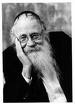
Rabbi Steinsaltz says:

Jose Ortega y Gasset, a Spanish philosopher/sociologist, wrote a book entitled The Revolt of the Masses, in which he says that nobility is best expressed by the French expression noblesse oblige.

Nobility is not about rights or riches; it’s about obligations. The higher someone’s noble rank, the more obligations he has.

Being Jewish means that we have obligations from the moment we open our eyes to the moment we go to sleep, from the day we are born to the day we are buried.

They never leave us, not for one moment.

There is no time in which we can say, “Okay, dear God, now we’ll part ways. We’ll meet again sometime.”

Being a Jew means that God intervenes in our pocketbooks, in our kitchens, in our bedrooms.

It doesn’t mean that we’re not allowed to do anything.

We’re allowed to do lots of things - but always with the notion that Somebody is there, and He’s keeping count.


--Rabbi Adin Steinsaltz

From the essay by Rabbi Adin Steinsaltz “It Takes a Giant” March 11, 2003

Read More...

Tuesday, April 29, 2008

"We cannot go to sleep until we find out what truth is"


My son is currently in Israel at a yeshiva. In our telephone conversation yesterday we spoke about his eagerness to study Talmud.

Our discussion reminded me of part of a talk Rabbi Steinsaltz gave at a Jewish school in Kiev.

Rabbi Steinsaltz said:

Some 150 years ago — this is a true story — a certain German prince wanted to know what the Talmud is.

He asked a certain rabbi to invite him to a yeshiva and teach him one page of Gemara.

Thus, for a few days this prince sat and studied the first page of Bava Kamma. He found it very interesting and thought-provoking, but there was one thing that he could not understand.

At the very end of the page, it says that the problem they were dealing with throughout has no practical meaning whatsoever, that it is merely theoretical.

What is the point of such a book? He asked, Who needs it?

I do not know what the rabbi’s reply to that prince was.

But if I were there, I would tell him that the main question of the Talmud is not “What do I need to do next?”; for that, there are other books.

When I want to know what steps I should take in order to cook a certain dish, I refer to the cookbook; and in order to know what my next action should be, I open a book of halacha or any other sort of practical book.

But in the Talmud we have something that will not necessarily be of any tangible benefit to me today, tomorrow, or ever. It is a value in its own right, something that gives me no respite.

For in the very final analysis, what I want to know is — Where is the truth?

And indeed, the central, all-encompassing question in the entire Talmud is, Where is the truth — as far as any human being can attain it.

For certain people — hopefully, for Jews — the pursuit of truth is an inner need.

We cannot go to sleep until we find out what truth is.

For us, truth is not a trivial matter such as what is the length of my trousers; it is something that we cannot live without.

And in this sense, it is deeply connected to our philosophy and to our faith.

--Rabbi Adin Steinsaltz

from the transcript of a talk titled "The Pursuit of Truth" presented to a girls' school in Kiev.

Read More...

Monday, April 28, 2008

"Did you ask a good question today?"

In contrast to all of the do's and don'ts of Pesach, the next major holy day on our calendar, Shavuot, by comparison, has little in the way of laws, customs and rituals. But it does have the one thing I admit I love most about Jewish tradition--study!

In the essay I am posting today, Rabbi Steinsaltz focuses on just that eternal Jewish activity: studying and learning--its importance in Jewish life, its uniqueness among humans, and its connection to Shavuot...


"Did You Ask a Good Question Today?"


For most, the act of studying stops abruptly at the end of formal schooling, whether after elementary school, high school, or college.

Not that they don’t have many experiences, and hopefully learn something from them. If they live in a good-sized city, they may have lectures to choose from, and perhaps go and listen, and even go again, if the subject interests them. But few adults sit down and study in a continuous, disciplined way; they find no compelling need or motivation.

Curiosity is a characteristic of youth. Many educational systems don’t understand this. They try to make every subject of study “relevant,” and that’s a mistake. Teachers, and sometimes parents, think that this enhances the desire and inclination to learn, but they are actually destroying curiosity, which is what is most important.

The idea of being interested in irrelevant things –that have no immediate relevance to our existence – is part of our uniqueness as humans.

In the preface to his book on popular physics, Leopold Infeld describes the earliest experiments with electricity. You can do them yourself. You take a piece of glass and rub it with silk, and you get electricity. Or, you take a piece of amber and rub it with flannel. You get electricity, this way, too, but it is a different kind: One is positive, and one is negative.

Now, what would most people do if they had those things? They’d take the piece of glass and use it as a paperweight. They’d place the amber on a shelf as an ornament. They’d use the flannel to clean their shoes, and use the silk to wipe their nose.


So how did we go from static electricity to computers – from the Greek philosopher Thales (the first to describe creating static electricity by rubbing glass with silk 2,500 years ago) to Steve Jobs tinkering in his parents’ garage? These people were curious. They had some time on their hands and they had some stuff to play with. They played in order to satisfy their curiosity. They tried this and that, and then found something interesting.

When a school tries to make everything relevant and utilitarian, it may kill curiosity. In some realms of knowledge, it is fine to ask what the good of something is, to see if it gives a practical answer to a practical problem. But sometimes, I want to find out about what it is. One may say that it is the lack of continuous curiosity that slows human advancement.

Jews are obligated to be involved in studying Torah simply to study Torah. As a religious activity, this is unusual. Most religions have expectations about belief and about doing the right things, but they don’t obligate you to study. Jews, however, study Torah as an independent activity that is not directly connected with belief or action. In fact, the most studied books in Jewish life, like the Talmud, have little practical use.

So why are people studying the laws of things that happened in remote times – and were rare even then – or things that the Talmud says never happened and never will happen?


We devote time to it because what we are doing is going after knowledge for itself, not as something to be used. Not everyone has the same level of active curiosity, but study is encouraged and done as an obligation. The number of classes and lectures available in a Jewish community can’t be compared to anything that happens in any other place.

Why does God want us to study? Theologically, it is a way to commune with Him. The ability to study for the sake of study is what I call a true human trait in which we are, in a way, higher than angels. Angels don’t seem to have curiosity; they know everything. And animals learn only what they need to live. So the only beings who are curious about anything are people.


This notion was always powerful within Jewish life, and it has pushed some people to high intellectual levels.


Isidor Rabi – who won the Nobel Prize for physics in 1944 – attributed his prize and his great achievements to his parents. When he came home from school, they never asked him what he learned. Rather, they wanted to know, “Did you ask a good question today?”

The Jewish approach to learning seems to have been ingrained very early and very deeply. Hectaeus, a Greek geographer during the reign of Alexander the Great, wrote about remote countries that were beginning to be known at the time. He remarked that he had heard of an interesting people who lived south of Syria: All of them were philosophers, that is, people who ask idle questions and are interested in wisdom for wisdom’s sake. That is a nice statement about our people.

On the upcoming holiday of Shavuot, we celebrate receiving the Torah. We don’t dance and sing with it, as on Simchat Torah. Rather, alone or together, we sit and learn – whatever text or topic we choose – just to learn and to connect with God.


--Rabbi Adin Steinsaltz

Read More...

Friday, April 25, 2008

"Jewish history basically begins with a naughty boy"


Recently, I heard Rabbi Steinsaltz say that while some people are accident-prone, he himself seems to be “story-prone.” A lot of untrue stories appartently circulate about Rabbi Steinsaltz.

Yesterday, the Executive Editor of Jossey-Bass, one of Rabbi Steinsaltz’s publishers, was talking with me about some of the many articles about Rabbi Steinsaltz frequently appearing in the press.

The conversation prompted me to go back and reread one of my favorite pieces, written by my friend (for over thirty years) Helen Weiss Pincus. Helen received an award from the Society of Professional Journalists for this article (First Place, “Weekly Profile Writing” 2004).

It was called “The World According to Rabbi Adin Steinsaltz.” Here is a slightly edited version of the piece. I hope you enjoy it as much as I do.

Click here:


"The World According to Rabbi Adin Steinsaltz"

By Helen Weiss Pincus, from The New Jersey Jewish Standard, October 31, 2003

Talking with Jerusalem scholar, educator, and author Rabbi Adin Steinsaltz is like grappling with a page of Talmud -- a particularly difficult page -- full of apparent non-sequiturs and elliptical references. What really interests the rabbi-rebel-scholar-mystic are the world’s “whys.” He eschews answers in favor of questions.

“Unluckily I don't know enough,” he said in a recent interview. “If I am going to be interviewed I will know even less. When you give all the time answers you don't have time for questions and the real things are questions. The world is so full of questions. In our times, in a certain way, physics became kind of a shambles. So it is even more interesting because you don't really know. You know now less than you knew when I was a youngster. You know more but you understand less.”In quest of questions, Rabbi Steinsaltz encourages Talmud study.
.
The culture-spanning image of a pale yeshiva student bent over dusty ancient tomes avidly pursuing pure knowledge – Torah lishma - is as real as ever, but Steinsaltz hopes to extend the exploration of the Talmud to many more people.

In 1965, he founded the Israel Institute for Talmudic Publications, and since then has been working on translating and reinterpreting the Talmud. Thirty-six volumes have been published in Hebrew, and volumes are available in English, French, and Russian.

The Talmud is an extensive amalgam of thousands of years and millions of words of discussions, debates, interpretations, anecdotes, and commentaries on the more succinctly written Chumash -- five Books of Moses. While the words, stories, and principles of the Chumash have become woven into other religions, the Talmud remains uniquely Jewish.

Steinsaltz believes Talmud study is the key to Jewish continuity. “A Jewish society that ceases to study the Talmud has no real hope of survival,” Steinsaltz says.

An educational innovator who has established schools on his home turf and abroad, and who at 24, was the youngest school principal in Israel, Rabbi Steinsaltz recalls his own unconventional early educational experiences with nostalgic satisfaction.

“When I entered high school, they began to talk about how a person is supposed to learn something in school. That seemed to me so impossible that I just left.”

Ultimately completing high school in two nonconsecutive years, the unconventional but enthusiastic student filled his open-classroom days by “talking with friends. Being alone. In fact even looking at some of the textbooks of school. I studied mostly Jewish things. It was a very nice time. I was mostly in the street. I learned a lot about Jerusalem, talked with people. I was in places. Not in school. All of it was very helpful.”

Although he clearly relishes his bad-boy past, students applying to Mekor Chaim, the elementary-through-high school yeshiva he founded started in Israel, are put through rigorous testing to filter out all but the “best kind of kids socially, intellectually, and religiously. Anybody that is below a certain level is not accepted. And then we take the best motivated and the best mannered of them.”

The Mekor Chaim teachers are also held to a high standard. In a heterogeneous classroom “a fair amount of kids don't understand a word. Some of them are not interested and so on. So then if the teacher achieves something, anything, it is an achievement. [But] when you have such a collection, if you don't achieve, then it shows that somebody is very guilty. If a teacher is not successful with [the Mekor Chaim students] he should be kicked from here to wherever.”

Steinsaltz, as a student, did not harbor such great expectations from his teachers. “In school, you see, I was very quiet. There was a tacit agreement between the school and me. I don't bother them; they don't bother me. I was sitting in the last bench. I was shortsighted even then so I didn't see anything written on the blackboard. But nobody asked me about it. So I was sitting reading books or writing something. I didn't bother the teachers; the teachers didn't bother me. It was quiet.”

He acknowledges that despite all available testing a child's potential sometimes goes undetected. Indeed, he would most likely not have made the cut at Mekor Chaim and the school would have lost a gifted student. “The thing which nobody can find out is who are the children that have the spark. This spark is something that sometimes you see. Something is burning. You know it is there. [But] sometimes it's so very well hidden ... that you don't see it in them. You don't see their future abilities or their future potential. I don't know the way to find it. Maybe it's the child that gets thrown out of yeshiva. Maybe it's the child that everyone wants in yeshiva. I don't know.”

A Guide to Jewish Prayer is one of Steinsaltz's more than sixty published books. He has spoken to Torah educators about how to make daily prayers meaningful. Could he offer suggestions for leading reluctant teens to prayer? ”

A teenager is really an obnoxious creature. Somebody wrote that human beings are the only creatures in the world that suffer their adolescents to stay with them. All other animals kick them out. All others. Horses. Elephants. They know that [adolescents] are impossible.”

These emerging adults, he continued, "undergo changes. And these changes are not easy at all. You form new relationships with everybody, including yourself. For some people it is a very difficult time. You have to meet your body again and it's a very different meeting than you had five years ago. You wake up and you find that you have a new life of dreams and desires.”

The educational component is the determinant, he believes, in how children deal with prayer.

"The question is what harm has been done to them before. If children are not pushed by brute force and if they get to understand what is the nature of prayer it is much easier. But in America you don't speak about prayer. You speak about repeating words in Hebrew that a boy or girl doesn't really understand. There is no emotional attachment. Prayer is an emotional intellectual communication with God. If you went to a Presbyterian school you possibly heard something about prayer. But if you went to a Jewish school you only heard about 'davening.' Small children shouldn't be pushed into full-fledged davening.”

Steinsaltz also speaks about to doctors at Israeli hospitals about medical ethics. He has a lot to tell them.

“There was a time when the doctors had an uncanny interest in me. I spent lots of time in the hospital making their lives miserable. They liked it when I left. I wasn’t very respectful of the doctors.”

Notwithstanding the aid of a computer -- a concession to handwriting so illegible that even he has trouble deciphering “a gimel from a chaf sofi,” -- words do not flow effortlessly for this prolific writer.

"One page sometimes takes me a whole day. Writing is for me a difficult job but still I manage to do it by stealing time. From whom can I steal time? From myself, from one thing, from another thing, sometimes from sleep. Sometimes, it's unforgivable, but sometimes from my wife. Writing takes me an enormous amount of time. But sometimes I look back and I see that I did write some words.”

Discussing how to find and allocate precious moments reminds the rabbi of an anecdote.

“It's a nice story. I have a friend, an acquaintance really. We met years ago. From the beginning he was strange. I used to meet him in hospitals. He would come to the hospital and play the fiddle. He would go from one room to another, ask people what they wanted and play it on the fiddle. He would play whatever they wanted in that particular room and then go on to the next. Big hospitals have lots of rooms so he would spend the day in the hospital. So I met him off and on. I thought perhaps he was one of those well-meaning people who had gotten into a blind alley in life. Later on, by chance I found out that this person didn't make a living by playing the fiddle. He was a lawyer. He did practice law but only in the late afternoon. He was a lawyer who spent most of his time playing a fiddle. So what is important? It's a good question.”

The rabbi mused about whether the lawyer should have used his time to achieve something “higher or nobler? He could possibly have become a judge. But he decided to become a fiddler playing in the rooms of a hospital. What's more important? People make decisions and these are a matter of sacrifice. This is a real person not a story about a legendary figure, a tzaddik. There is a good chance you can bump into the fellow if you happen to visit a hospital in Jerusalem…What do you want to get from life? Probably not what everybody would suggest is the best choice.”

“Sometimes,” he said, “I tell the children [in my schools] that their job is to make the lives of the teachers miserable by asking them questions and making them study something.”

His own childhood was surrounded by many questions and few answers. “When I tell my children that compared to my parents I am a very open book, they don't believe me. My father was involved in all kind of secret things. His motto was, as in every secret service, ‘You know only what you need to know.’ The need to know is in the present. Everything with respect to the past that has nothing to do with my life was never told to me. Even now I know very little about my parents’ lives. They didn't talk. First person singular wasn’t very common there."

A Midrash about biblical patriarch Abraham relates that his father, Terach, once left him in charge of the family business -- an idol shop. Rather than sell the merchandise, Abraham, already a confirmed monotheist, challenged the customers' beliefs and dissuaded them from purchasing the fresh-out-of-the-kiln deities.

“Jewish history,” Steinsaltz said, “basically begins with a naughty boy who went to his father's business and asked ‘Who cares about this?’ That's our history.”


Read More...

Thursday, April 24, 2008

"The Caterpillar Does Not Become a Butterfly in a Single Act"


Recently I’ve been in email correspondence with a young man who has asked me to help him in his process of becoming more involved Jewishly.


Today I found myself insisting that he track down and read Rabbi Steinsaltz’s extraordinary book Teshuvah: A Guide for the Newly Observant Jew.

My suggestion prompted me to go back and reread one of the most important chapters in the book for me personally, “All or Nothing: The False Dilemma.”

In that chapter Rabbi Steinsaltz writes:


"All or Nothing: The False Dilemma"

A person who, through neglect, develops a malady in one part of his body, need not, for the sake of consistency, neglect the other parts as well.

So it is with the mitzvot.

The question of “all or nothing” is also invalid from a human, personal point of view.

Though the ba’al teshuvah may wish to see himself as one reborn and to begin his spiritual life with a sense of wholeness, it is important for him to recognize that even in spiritual rebirth it is not possible to take on everything at once.

The people of Israel, in accepting the Torah, did not receive it all at one time.

Rather, the process was a protracted one, from the early preparatory stage of the seven Noahide laws to the acceptance of additional mitzvot in Egypt, at Marah, and at Sinai, to the full revelation there that followed.

Similarly, a child raised to be an observant Jew takes upon itself the full yoke of the mitzvot only after long preparation; years of training and the gradual, step-by-step assumption of responsibility according to its intellectual readiness and practical capacity.
The essential point is that living beings do not undergo sudden, complete transformations.

The caterpillar does not become a butterfly in a single act but as a result of a gradual process, governed by certain laws.

Within this process there appears to be a series of jumps between distinct stages, and these the ba’al teshuvah also must make from time to time.

But these transitions, too, are neither as quick nor as sharp as they appear.

--Rabbi Adin Steinsaltz


From Teshuvah: A Guide for the Newly Observant Jew, “All or Nothing: The False Dilemma,” pp. 18-19

Read More...

Wednesday, April 23, 2008

"Obstinacy Will Be On Your Side"


Rabbi Steinsaltz teaches:


When the Jews, immediately after receiving the Torah, made the Golden Calf, Moses prayed to God asking Him to forgive the people for this terrible sin.

He said, “Ki am kishei oref hu. Visalachta…for it is a stiff-necked people, and you shall forgive...”

This seems strange. If they are an obstinate people, then why should God forgive them?

The Ramban, Rabbi Moses Ben Nachman, who lived in the 13th century in Spain, answered this question.

He wrote that the verse means that Moses says to God:

“You know your people. They are a terribly obstinate people. To move them from one level to another, from one position to another, takes a long time. Because of this, you should forgive them.

“You must remember that they lived 400 years amidst an evil nation. You want them to change? You can’t expect them to change in a day. It will take them years and years to change.

“But when they are changed, the same obstinacy will be on your side. They will never leave you.”

--Rabbi Adin Steinsaltz

Read More...

Tuesday, April 22, 2008

"To Accept Things That Are Beyond Our Faculties of Comprehension"


On the second night of Passover we begin looking ahead to the holy day of Shavuot.

With the coming of each special day on the calendar I go to my shelves of books by Rabbi Steinsaltz and review what he has written about that approaching day.

One special source is a book-length dialogue between Rabbi Steinsaltz and Rabbi Josy Eisenberg of Paris, France, called The Seven Lights On the Major Jewish Festivals, (Jason Aronson, 2000).

In the chapter on Shavuot, Rabbi Steinsaltz teaches:

One of the problems facing this generation is that we have perhaps become too “intelligent,” too knowledgeable, or too rationalistic, to be able to experience the total and spontaneous allegiance of our ancestors.

Worse still, we tend to forget that there is something beyond reason. Jews need to face this question both as individuals and as a nation.

How can we recover this ability to transcend the particular and seize reality in its totality without performing fancy calculations beforehand, without asking, “Do I understand?” “Do I want this?” “Am I ready?”

This is why the sages say that every day we need to place ourselves at the foot of Mount Sinai.

This can take place on Shavuot or on any day of the year.

The face-to-face encounter at Sinai involves an encounter with Oneness and willingness to accept things that are beyond our faculties of comprehension.

--Rabbi Adin Steinsaltz

From The Seven Lights on the Major Jewish Festivals by Adin Steinsaltz and Josy Eisenberg, p.231-232

Read More...