We have moved!
http://arthurkurzweil.com/let-my-people-know/
Hello,
IT'S 3 EASY STEPS!
IT'S 3 EASY STEPS!


Hello,
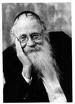
I just transferred the "Let My People Know" blog over to a new, more efficient server. As a result of this transfer, you need to re-subscribe to "Let My People Know" in order to continue receiving your daily teaching from the words of Rabbi Steinsaltz.
IT'S 3 EASY STEPS!
1) In order to re-subscribe, just go to http://arthurkurzweil.com/let-my-people-know/ .
2) In the top right hand corner enter your email address.
3) Important: Check your email for a "subscription confirmation" notice and click on the link inside the email.
That's it! Your subscription will be confirmed and you will continue receiving Rabbi Steinsaltz's illuminating teachings.
IMPORTANT: Don't forget to check your email and click on the confirmation link, or you will not have completed the subscription process!
"We are unintentionally, but continuously, brainwashed into thinking that the spiritual is not very real"
"Our assumption that existence is primarily physical, and that reality is that which is tangible, is not self-evident, natural, or inborn.
From Simple Words by Rabbi Adin Steinsaltz
"The practical mitzvot are not a device for attaining spirituality, love of God, and other spiritual aims.
The question of whether a person believes in God or denies Him is not of any greater 'concern' to God than whether a person smokes on Shabbat.
--Rabbi Adin Steinsaltz
From Opening the Tanya by Rabbi Adin Steinsaltz
"A cardinal principal in the service of God is that it must be done with joy.
Nowhere does the Torah expressly forbid sadness and depression, yet this is the most virulent of sins, for it stifles the heart and mind, closing them to the service of God.
Joy is not an express mitzvah but is the greatest of mitzvot, for it opens a person's heart and mind, enabling him to perform all the mitzvot and to make a mitzvah of everything."
From Opening the Tanya by Rabbi Adin Steinsaltz
"Just as the awareness of wrong becomes increasingly deep in Hell, the understanding and enjoyment of good grow constantly stronger in
Unlike Hell, which is a limited, finite stage, because it has to correct and amend what happened in a finite span of life, the joys of
To use a physical metaphor, the absolute zero of temperature is defined and closed.
But there is no upper limit to higher and higher temperatures.
The freed, cleansed soul is now able to have a touch of Godhead, which is the absolute infinity that contains the wholeness of everything.
While being connected and confined by the body and by the shadows of the world, the soul can hardly grasp it.
But in another stage of existence, when these boundaries are no longer there, the soul can keep ascending for eternity."
--Rabbi Adin Steinsaltz
From Simple Words by Rabbi Adin Steinsaltz

"Although the patriarchs intuitively observed the entire Torah even before it was given, once it has been given, we must follow its directives rather than our intuitions, because the Torah has become the pattern of the rectified world.
It is the key, the map, in which reality appears as it should be, in which God Himself appears, without the constriction and the distortion of the created world.
As a rough analogy, a lock is built in such a pattern.
It contains a row of teeth that are out of alignment, that are purposely 'distorted,' as it were.
The key that opens the lock has a configuration that fits with teeth in the lock, making it possible to open the lock.
To a person who does not have the key, the door remains closed.
To a person who does have the key, the door is open.
The existence of this world is closed, and we cannot see the divine beyond it.
There is no direct connection between one level and the next leading directly to God.
But the commandments create a direct link between the created and its Creator, with a direct connection to the highest point, with no distortion.
In this sense, the performance of a commandment completes the wheel of creation."
From Learning from the Tanya by Rabbi Adin Steinsaltz

"A person involved in Torah and mitzvot in a sense organizes the world, transforming the chaotic universe into order.
A person involved in Torah and mitzvot collects snippets of information from that uproar and combines them so that he receives meaningful communication from God.
Thus, this noise, which normally doesn't allow us to hear anything, is given shape and transformed into an instrument that transfers meaning."
--Rabbi Adin Steinsaltz
From Understanding the Tanya by Rabbi Adin Steinsaltz