Friday, November 27, 2009

"All of us accept almost everything on faith"


"For many people, among them those who either regret or boast about their being nonbelievers, the word "Faith," written with a very capital F, is a very big block.

In real­ity, however, faith is related not only to Great Things; it has to do just as much, if not more, with the myriad of lit­tle things that are a part of everybody's daily life.

There are, obviously, many people who are credulous, and some others who are much less so, but nearly every­one is a believer to some degree.

Belief exists even in the most hardheaded, rational nonbelievers.

Many of us take pride in our rationality—we think we base our actions and thoughts on accurate knowledge, verified facts, and an orderly sorting and sifting of opinions.

The truth, however, is that nobody is a total nonbeliever; all of us ac­cept almost everything on faith.

Faith, in the everyday, common sense of the word, is so ingrained in our lives that we cannot do anything without it.

We accept what we are taught in school and what we learn in the street.

Most of these things are not only un­verified, they are unverifiable, yet they are still a huge part of our lives.

It is practically impossible to do any real checking about most basic things.

We do not have the time, the facilities, or the talents to find out for ourselves about most things that we say we know.

We accept the facts about the height of Mount Everest—even most of the people who climb it do not bother to double-check the measurements—just as we accept facts about cars and electricity, signing contracts, and walking in the street.

We take so much for granted because we have faith—to some degree—in the car dealer and the electrician, and in the normal, even decent, behavior of those people we en­counter."

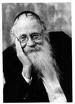
--Rabbi Adin Steinsaltz


From
Simple Words by Rabbi Adin Steinsaltz

Read More...

Thursday, November 26, 2009

"In Heaven we will be judged according to our level of holiness"


"Spirituality and spiritual entities are not inherently superior or better than material ones.

Good and evil can both be spiritual or physical.

Although some religious groups tend to equate spiritual with good, matter and body with evil, it is obviously untrue.

There can be ex­tremely evil spiritual worlds, from Nazi ideology to every­day cruelty.

Avarice and hatred are spiritual qualities, but surely not good ones.

The body, too, may become a vehicle for all kinds of evil, just because the spirit within it is evil.

However, it, too, can be, both in itself and as a tool, a means to very admirable things.

A great philosopher is not inherently superior to the long-distance runner, al­though societies may differ in favoring one or the other.

Likewise, in Heaven they will be judged according to their attitude to holiness, rather than according to their mental or physical prowess."

--Rabbi Adin Steinsaltz


From
Simple Words by Rabbi Adin Steinsaltz

Read More...

Wednesday, November 25, 2009

"God does not love or hate anyone"


"The darkness and the light may be described as polar opposites, so that essentially they are part of a single whole.

This is also true in the realm of morals, at least insofar as God is concerned.

Darkness and light, good and evil, are all the same to Him.

He is not made happy by someone performing a mitzvah, nor is He made sad by some transgression or other.

People tend to believe that they are doing something for God by doing good, as though the Divine profits by it in some way or other, or that it gives Him pleasure.

Whatever the difference, and there is a great one at many levels, between light and darkness, day and night, good and evil, it does not have the same meaning for God as for man.

For the truth of the matter is that God gives, but does not receive; He influences and is not influenced; He acts but is not acted upon.

It is not a matter of the size or importance of anything, but rather of different worlds.

God does not belong to anything knowable, nor can He be said even to exist in terms of the ordinary realm of things.

For example: a person performs an act, good or bad.

It can only be done with the cooperation of the Divine, because of the Divine force in him and the action of the laws of nature.

Someone desecrates the Sabbath, let us say.

It is done as part of, and within the framework of, a cosmos maintained by Divine power in all its details.

All the laws continue to operate, unaffected by the person's breaking the Sabbath rule.

God is oblivious.

No matter how sincerely one endeavors to rebel against the Divine, God continues to give life and, altogether, is not in the least offended.

To be sure, there may be reactions to such a rebellion as part of the laws of life and the world.

What is more, a person can flourish even in sin, so that, it would seem, what we call the Divine indifference has moral implications.

Nevertheless, we do speak of the anger of God or of the fact that He is made joyful by something that happens in the world of men.

Or as Rabbi Shimon Bar Yochai said about some unlucky person: "He acts thus and is hated by God, and I do not like him."

This is the sort of statement that hints at more than it states.

That which is not known definitely, but guessed at as a result of circumstances, is that a certain person is "hated" by God— and this is meant in the same way, the same anthro­pomorphic image, as saying, for instance, that nature hates a vacuum.

It is an image, and the meaning of it is simply that I don't like someone.

It does not intend to convey a Divine sentiment.

Nature, or God, does not love or hate anyone.

When I say that God likes or dislikes a person, I am really describing the way this person relates to things of the world.

The anthropomorphic image, however, has its own necessi­ty, its own emotional logic.

When God is described as being furious with someone and binding the heavens with His wrath, the same forceful expressiveness cannot be achieved by an abstract statement to the effect that a Jew who falls into idolatry is opposing the inner, spiritual system of the universe and inviting disaster.

Therefore, because of the limitations of the human soul and the human imagination, the writings of Scripture have to use anthropomorphic imagery.

The distor­tion arises when modern man fails to respond even to this emotionally direct expression."

--Rabbi Adin Steinsaltz


From
The Sustaining Utterance by Rabbi Adin Steinsaltz

Read More...

Tuesday, November 24, 2009

"Is it possible for someone to return who was never there?"


"The root meaning of
teshuvah is return to God, or to Juda­ism, in the inclusive sense of embracing in faith, thought, and deed.

On the simplest, most literal level, the possibility of return can only exist for someone who was once "there," such as an adult who retains childhood memories or other recollections of Jewish life.

But is it not possible for someone to return who was never "there," who has no memories of a Jewish way of life, for whom Judaism is not a personal but a historical or biological heritage, or no more than'an epithet that gives him a certain meaningless identity?

The answer is unequivocally in the affirmative, for — on the more profound level—repentance as return reaches beyond such personal configurations.

It is indeed a return to Judaism, but not to the external framework, not to the religious norms that man seeks to understand or to integrate into, with their clear-cut formulae, directives, actions, rituals.

It is a return to one's own paradigm, to the prototype of the Jewish person.

Intellectually, this paradigm may be perceived as a historical reality to which one is personally related, but beyond this is the memory of the essential archetype that is a part of the soul structure of the individual Jew.

In spite of the vast range of ways in which a Jew can alienate himself from his past and express himself in foreign cultural forms, he nevertheless retains a metaphysically, almost genetically, imprinted image of his Jewishness.

To use a metaphor from the world of botany:

A change of climate, soil, or other physical conditions can induce marked alter­ations in the form and the functioning of a plant, and even the adoption of characteristics of other species and genera, but the unique paradigm or prototype persists."

--Rabbi Adin Steinsaltz


From
The Thirteen Petalled Rose by Rabbi Adin Steinsaltz

Read More...

Monday, November 23, 2009

"We do not declare the world to be a lie, a delusion"


"If there is no direct communication with God, no possible understanding of the Divine, what kind of connection do we have?

To which it may be answered that since our component parts are divine, we are a part of God.

And being a part of Him, we can devise some sort of communication with God.

It is just that this communication does not penetrate the realm of our minds in the sense that it can formulate things as whole entities.

What, then, do we live by?

We live by those shadows, or figments, that we can grasp, that we can make contact with, little as it is.

Because that which we grasp is a positive essence.

Clinging to it, we do not declare the world to be a lie, a delusion; we simply accept that though sometimes it is dark and evil, it is still Divine manifestation.

We are bound to both aspects of the world, that which is and that which is not, the manifest and the unmanifest, for they are intrinsically one.

Our specific existence simply depends on our being somewhere in between—we draw sustenance from it, we never entirely belong to either realm, we never arrive at our journey's end.

On the other hand, that which we contain within our grasp is true—it is not a falsehood; it is only a product of our being where we are, and we cannot overleap it.

We are an expression of the Divine and yet it is not given to us to comprehend it.

We stand on the other side of an abyss, formed by the very act of Creation.

As it is said, 'And no man shall see Me and live.'"

--Rabbi Adin Steinsaltz


From
The Sustaining Utterance by Rabbi Adin Steinsaltz


Read More...

Sunday, November 22, 2009

"On occasion two people feel close to each other because they are two branches of one soul"


"The House of Israel is composed of 600,000 souls, corresponding to which the world is composed of 600,000 segments.

This reckoning is not so simple, because the nation of Israel has always consisted of more than 600,000 people.

These 600,000 particular souls are roots, and each root subdivides into 600,000 sparks,

The soul of a Jew at a particular time and place is not generally speaking one of the 600,000 original souls but only a part of it, a spark.

This division of the root souls explains why on occasion two people who apparently have nothing in common—family ties, educational background, or shared viewpoints—feel a bond between them.

The underlying reason for this mysterious closeness is the essence of their inner souls.

They feel close to each other because their souls are close; they feel suited to each other because they are no more than two branches of one soul.

The fact that they are not necessarily similar is because the root soul does not always branch out in a symmetrical fashion.

One person may be more intellectual and another more emotional.

Yet they will feel an inexplicable connection, for they are fragments of one soul."

--Rabbi Adin Steinsaltz


From
Understanding the Tanya by Rabbi Adin Steinsaltz

Read More...

Friday, November 20, 2009

"Lighting candles expresses the essence of Shabbat itself"


"There is much rabbinic discussion of the connection between women's role and the mitzvah of light­ing candles.

The act is seen as one of tikun olam, "repairing the world" and illuminating it.

Furthermore, Shabbat itself, and the Sabbath night in particular, are seen as inherently related to the role and nature of women.

The night of Shabbat is the time of the exaltation of the Shekhinah—God's indwelling Presence in the world.

The Shekhinah grows stronger on Shabbat, its light is more evident, and it turns routine household activities such as eating, drinking, and sleeping into sacred acts.

Woman is the eternal symbol of the Shekhinah.

The Shabbat hymns, such as Lekha Dodi; the Shabbat evening service; Kiddush; and the lau­datory passage from Proverbs, "A Woman of Valor," recited at the Friday night table, are all replete with imagery linking Shab­bat, the Shekhinah, and women.

Each verse and each custom enfolds and unfolds additional levels of association.

The lighting of the candles is not only the first act of wel­coming Shabbat, in which the members of the household re­ceive its sanctity into their midst.

It also expresses the essence of Shabbat itself, the penetration of the light of this special day into mundane reality."

--Rabbi Adin Steinsaltz


From
Teshuvah by Rabbi Adin Steinsaltz

Read More...